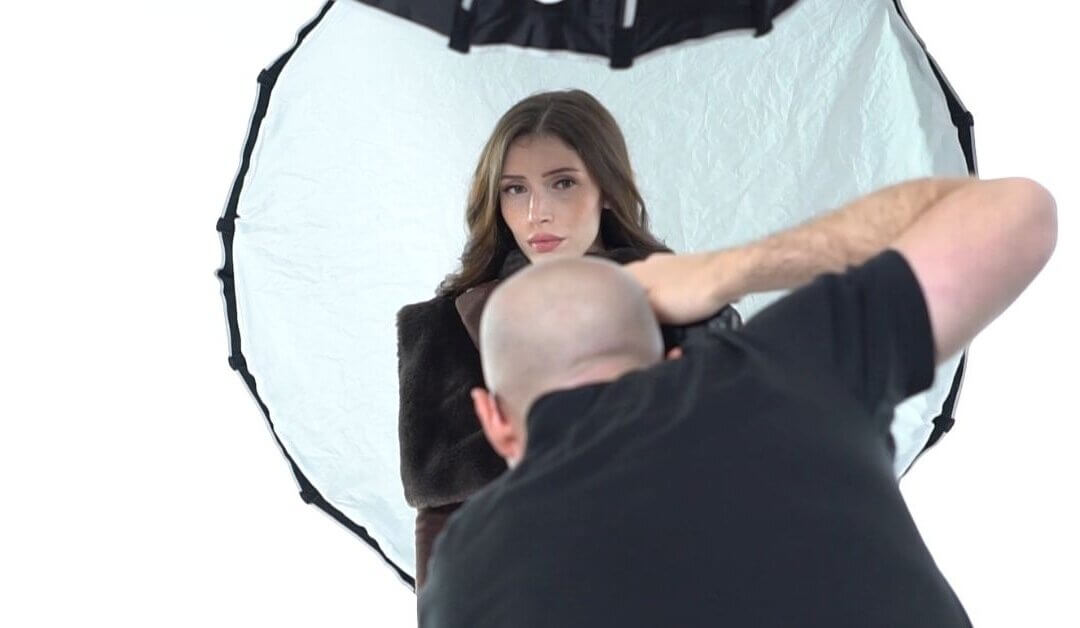
Teaching on CreativeLive didn’t just refine how I communicate photography. It sharpened how I approach photography as a business, as a craft, and as a responsibility to clients.
Standing in front of thousands of students forces clarity. You cannot hide behind trends, shortcuts, or vague advice. You have to know what actually works.
And that experience reshaped how I operate as a professional photographer.
1. Professional Photography Is About Results, Not Opinions
One of the biggest shifts I saw was this:
Amateurs debate.
Professionals deliver.
When teaching, students don’t want theory. They want outcomes. They want to know:
- How to create consistent images
- How to work with real clients
- How to solve problems on set
That forced me to strip away anything that wasn’t producing results.
In your own work, this matters. Clients are not hiring your opinions. They are hiring your ability to execute.
2. Simplicity Scales, Complexity Breaks
When you are teaching at scale, complexity fails.
If something is overly complicated, it:
- Confuses the audience
- Slows down production
- Increases the chance of mistakes
So everything had to become simpler:
- Lighting setups became more intentional
- Direction became clearer
- Workflows became tighter
The best photographers are not the most complicated. They are the most consistent.
3. You Learn What Actually Matters on Set
Teaching exposes what is essential versus what is optional.
You quickly realize:
- Gear matters less than understanding light
- Direction matters more than camera settings
- Preparation matters more than improvisation
You have to build repeatable systems.
That is what separates working photographers from hobbyists.
4. Authority Is Built Through Contribution
Being an instructor is not about showing off your work.
It is about giving people tools to succeed.
Too many photographers focus on:
- Posting finished images
- Chasing validation
- Competing for attention
But real authority comes from:
- Teaching
- Sharing process
- Providing insight
The more you contribute, the more you stand out.
5. Communication Is the Real Skill
Photography is not just visual. It is relational.
Through teaching, I had to improve how I:
- Explain creative direction
- Give feedback
- Guide subjects
- Manage expectations
If you cannot communicate clearly:
- Your shoots take longer
- Your clients feel uncertain
- Your results become inconsistent
Great photographers are not just image-makers. They are communicators.
6. Consistency Builds a Career
You cannot rely on one great shoot.
You need:
- Repeatable quality
- Reliable execution
- Clear methodology
Anyone can create a great image once.
Professionals do it every time.
7. The Work Behind the Work Matters More
Most people struggle with everything around the camera:
- Booking clients
- Pricing work
- Marketing their services
- Delivering a professional experience
Photography success is not just about creativity.
It is about:
- Systems
- Strategy
- Positioning
Final Takeaway
Teaching at CreativeLive forced me to refine not just how I shoot, but how I think.
It eliminated fluff.
It prioritized results.
It demanded clarity.
Professional photography is not about doing more.
It is about doing what works, consistently, at a high level.
Work With Me
Most photographers focus on taking photos.
We focus on producing results.
If you need:
- Magazine-quality imagery
- Strategic brand visuals
- A photographer who understands both creative and commercial outcomes
Then it is time to work together.