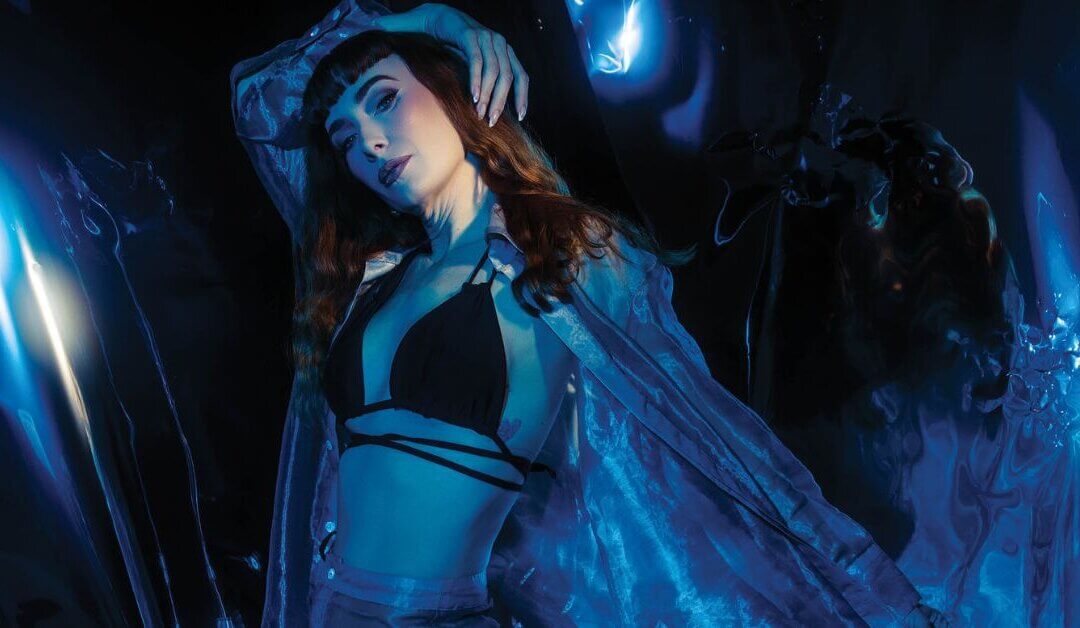
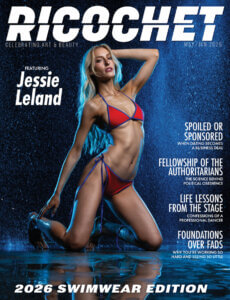
There’s a moment on every editorial set where the lighting, the wardrobe, the models and the styling all click into place at once. When that happens, it feels like you know you’re not just taking a photo anymore, but instead building an entire world to create in. That’s exactly what happened on set for Ricochet Magazine’s 2026 Swimwear Issue, and I want to pull back the curtain on how it came together.
Shot at my studio, The Hive Studios in Phoenix, Arizona, this production came together in two phases: a full day building and testing sets (each one designed and built by hand), followed by a tightly-run three-hour shoot production.

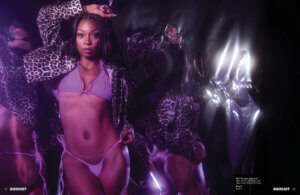
The Brief: Breaking the Studio Out of the Studio
Ricochet’s swimwear issue needed to feel elevated; more high-fashion editorial than beach catalog. But the real creative goal went a level deeper than that: I wanted to break the convention of what a studio shoot looks like. A studio is usually a controlled box with seamless paper and a couple of strobes. I wanted The Hive Studios to feel limitless instead, like the space itself had no walls.
Two materials made that idea possible: mylar and water.
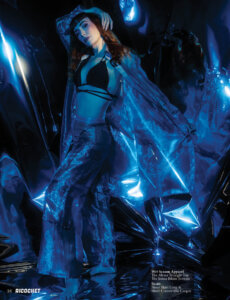
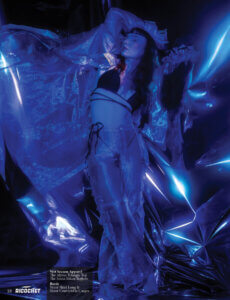
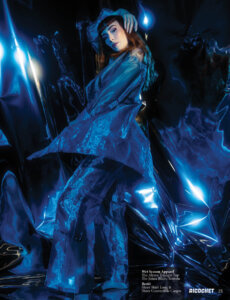
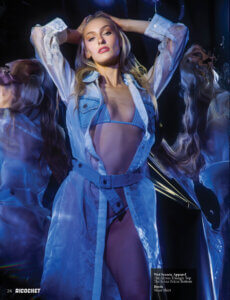
Mylar became the backbone of the day because it does almost everything. It’s reflective enough to use as a light bounce, textural enough to hang and light as a backdrop, and flat enough to lay across the floor and erase the line between ground and background entirely. One roll of material, three completely different jobs, depending on how it was lit and shaped.
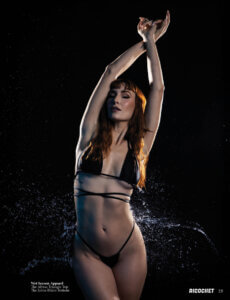
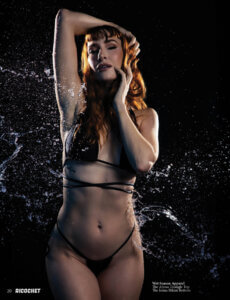
Water was the second layer. An environmental element that gives every frame more context than a plain backdrop ever could. Rain falling through gel light, a body floating just under a rippling surface, water splashing around a talent in a burst of frozen motion; each one adds a sense of place to an image that would otherwise just be “model in front of a background.”
That meant building out a handful of completely different physical sets inside The Hive Studios in a single day, each engineered from the ground up:
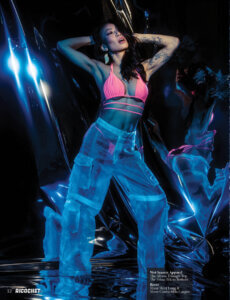
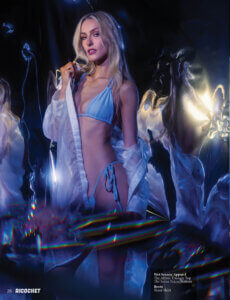
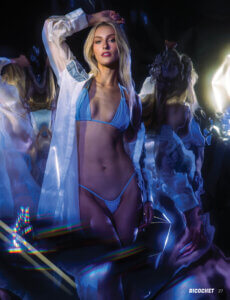
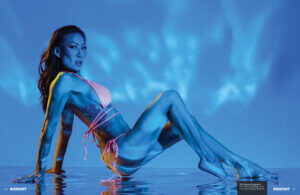
- A mylar cover set: crinkled and shaped by hand, then lit in cobalt blue to throw light in unpredictable, sculptural directions behind the model. It reads as abstract and almost liquid on camera.
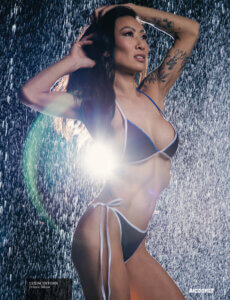
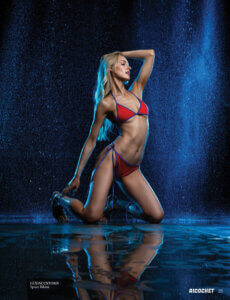
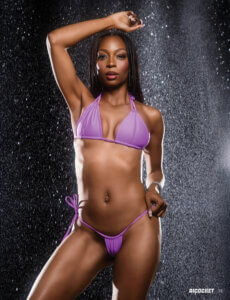
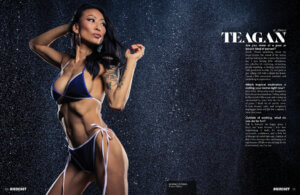
- A simulated rain rig: built in-house, dialed in for droplet size and fall rate so it would catch the blue and black gel light mid-air, paired with a reflective wet floor to double every pose. This is where the grit came from: water catching light mid-fall, hair sticking to skin, raw elemental energy.
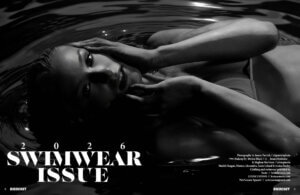
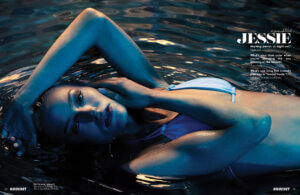
- A full pool set: built into the studio specifically for this shoot, letting us shoot a model floating just below the surface, both in color and in dramatic black and white. Less about the swimwear here, more about mood: soft ripples, low light, total stillness.
- A mylar “zero horizon” floor: the same mylar, repurposed a third time, laid flat across the ground to erase the line between floor and background and create that infinite, waterline-like look you see in the reflection shots.
- Bold gel lighting: hot pink, cobalt, and violet washes layered across these built sets to separate each model’s story visually, so the magazine spread reads as a full series rather than a repeat of the same three shots.
We didn’t shoot these in a fixed order, with one exception: any set involving water got pushed to the end of each model’s call schedule. Wet hair, wet wardrobe, and wet gear are hard to undo, so every dry, controlled set came first, and the shoot got progressively more chaotic and elemental as the day went on.
Building your own sets instead of buying or renting pre-made ones is more work up front, but it’s the difference between a shoot that looks like everyone else’s swimwear editorial and one that has a genuinely original visual language. That’s the part of this job I care most about.
The Real Challenge: Four Models, Three Designers, Three Hours
Here’s the part that never makes it into the final magazine spread: this entire multi-set production; four models, wardrobe from three different swimwear designers, and every look you see in the issue; had to happen inside a three-hour window.
That timeline doesn’t work if you’re building sets and dialing in lighting during the shoot. So every set, every gel color, every lighting ratio was built before a single model walked in. By the time the shoot started, the only variables left were the model, the outfit and fine-tune adjustments. This meant we could move fast between wardrobe changes and still walk away with real variety across four completely different looks and personalities, instead of rushing through a handful of safe, repetitive shots just to get through the day.
That prep work is invisible in the final images, but it’s the entire reason the shoot was possible at that pace.
Directing for Editorial Energy, Not Just a Pretty Pose
The technical setup only gets you halfway. The other half is direction, and with a cast of four models (Teagan, Monica Alexandra, Jessi Leland, and Jessica Rasley) moving through the wardrobe from three designers in a compressed window, there wasn’t time for a model to “find” a pose on her own. I’m hands-on and vocal on set, calling specific posing directions shot to shot, not just setting someone in front of a light and hoping for the best.
Some of that came through movement; asking a model to whip her hair through the rain rig on a beat, rather than holding a static pose, so the water and light had something kinetic to catch. Some of it came through stillness; in the submerged water set, it was the opposite instruction: barely move, let the ripples do the work.
This is the part of editorial photography that doesn’t show up in the final image but is the actual job: constant, specific direction that pulls a distinct performance out of every model, shot after shot, fast enough to keep four looks and three wardrobe changes on schedule.
The Team Behind the Shot
No editorial story comes together solo. Full credit to the crew that made this shoot possible:
- Photography & Set Design: James Patrick (@jpatrickphoto), shot at The Hive Studios, Phoenix, AZ
- Makeup: Denise Black (@__beautybydenise__) and Meghan Martinez (@megmarie)
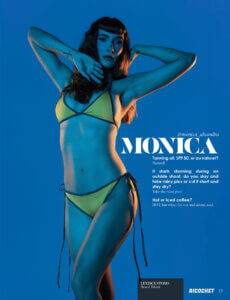
- Models: Teagan (@t0nixx), Monica Alexandra (@monica_alxandra), Jessi Leland (@jjessicaleland), and Jessica Rasley (@a1sexyjess)
- Swimwear & wardrobe: Best? (bestobeseen.com), LEXISCUSTOMS (lexiscustoms.com), and Wet Season Apparel (wetseasonapparel.com)
This kind of collaborative, multi-set production is what separates a magazine-caliber editorial from a standard portfolio shoot; it takes a team thinking in the same visual language from wardrobe through to final retouch, built on top of sets I designed and constructed myself from the ground up.
Why This Kind of Shoot Matters for Your Portfolio
If you’re a model, brand, or publication in Phoenix looking to build out editorial-caliber content, this is the level of intentionality I bring to every shoot. A real concept instead of “let’s just get some pretty shots,” and direction that pulls performance out of every subject in front of the camera.
Whether it’s a swimwear story, a full fashion editorial, or a personal branding shoot, the process is the same: build the world first, then put the subject inside it.
Want to build something like this together? I’m James Patrick, an editorial and fashion photographer based in Phoenix, Arizona, working with models, brands, and publications on concept-driven shoots. Get in touch to talk about your next project, or follow along on Instagram @jpatrickphoto for more from the Inside the Shot series.
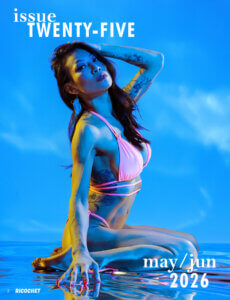
Ricochet Magazine’s May/June 2026 Swimwear Issue is out now — see the full spread here.